
A box stuffed with two hundred and fifty box turtles, prized for their multicoloured shells, awaits their future in the port of Miami after seizure of an illegal shipment. These seizures are often destined for Asian markets, where the animals are valued for medicinal purposes, as cultural tokens, and as pets. Conservative black-market estimates of $1,000 to $2,000 per turtle in these markets make the trade lucrative.
Confiscated box turtles suffer from inhumane trafficking conditions, often crammed into a sock and tightly packed with others. Close quarters trigger infections, dehydration, and cracked shells. According to the Association of Zoos and Aquariums, the animals are like trauma victims and in need of rapid, intensive care.
Impact on North American Box Turtles
While a couple of hundred captured turtles may seem small, removing one box turtle from its native habitat is devastating to the overall population. A female box turtle reaches reproductive maturity around 10 years of age, making the species vulnerable to depletion due to its slow reproductive rate.
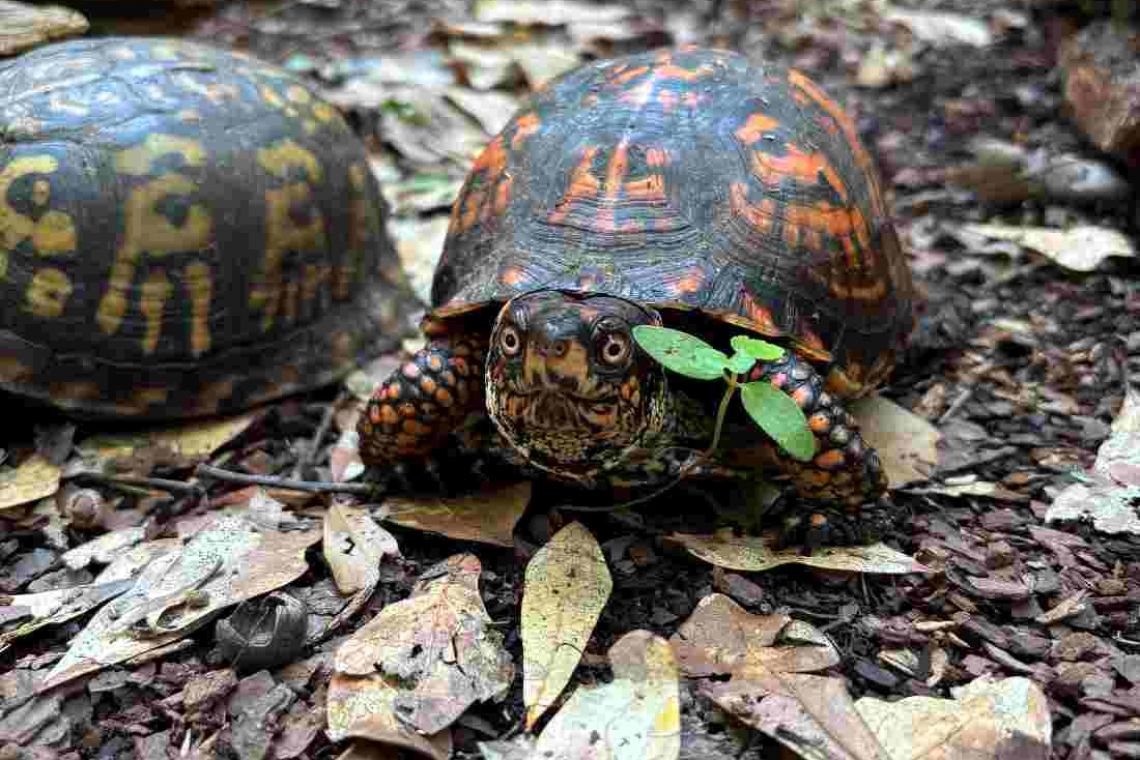
According to Taylor Berry, Wildlife Curator at Reflection Riding, box turtles play a diverse role in our ecosystem. The Eastern Box Turtle disperses seeds and is the only pollinator for the Mayapple. The turtles are also a food source for other animals. While box turtles may not be as flashy as some endangered species, they are a building block in the foundation of our environment.
Turtle Rehabilitation
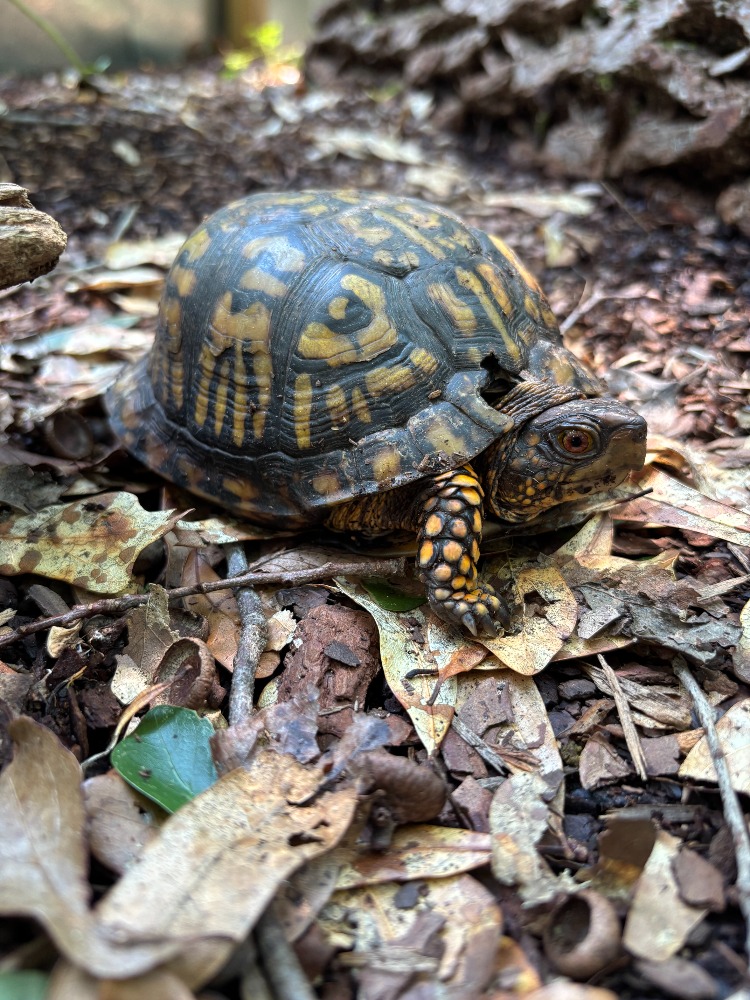
Reflection Riding, a founding member of the American Turtle Saving Animals from Extinction (SAFE) Program, plays an important role in the rehabilitation of box turtles. With support from zoos, aquariums, and conservation centres, confiscated turtles move through a four-phase system.
In the first phase, veterinarians must determine the disease burden of captured turtles. The animals are tested for infections, which costs around $800 per turtle. Because infections, such as ranavirus, are lethal and may infect other animals, they can prevent reintroduction to the wild. The vetting process marks the beginning of an arduous journey for the box turtles.
Once the box turtles are cleared of serious infections, they are moved to a short-term facility to monitor them for known diseases such as mycoplasmosis. After this brief quarantine, the turtles are sent to places like Reflection Riding for phase 3 quarantine and monitoring.
Box Turtle Program at Reflection Riding
As box turtles enter the longer-term monitoring and rehabilitation, they are often still involved in ongoing litigation. Authorities must first determine if the turtles were obtained legally so they may be returned to their owner. The process can take months to a couple of years, especially if there has been illegal activity. At the time this article was written, two of the seven box turtles in the SAFE program were still in litigation.
Once out of litigation, the turtles enter phase 4 quarantine for continued monitoring. The goal is to send the turtles back to their original habitat. And if the historical home range for each animal can be determined, they are rewilded to their original habitat. In the interim, the box turtles are used for conservation education at Reflection Riding.
Rewilding through Genomics
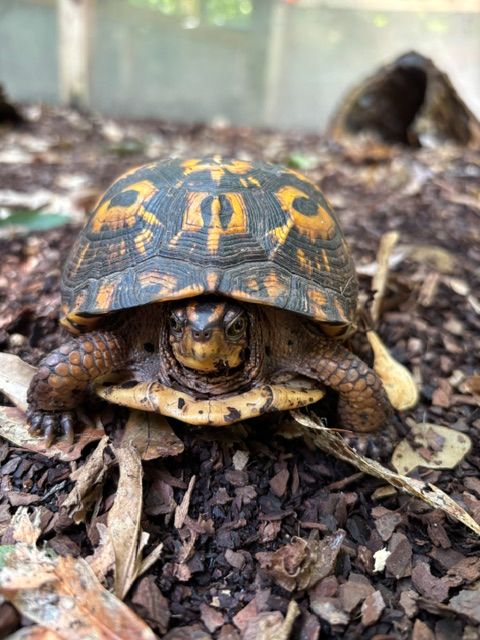
Since poachers don’t disclose where they captured their prey, rewilding poses a major challenge. Box turtles typically have a small home range, as small as two acres. And they want to stay within those self-imposed boundaries.
Therefore, it’s important to identify a box turtle’s native habitat. Rewilding may require genetic identification. Using genetic databases, scientists can identify the optimal location for reintroducing the turtle into a habitat that enhances its survival chances.
The Turtle Survival Alliance (TSA) and UCLA’s Institute of the Environment and Sustainability (IoES) have initiated the Atlas of Turtle Genomes for Conservation (ATGC) for turtle repatriation. The program facilitates sample collection and analysis as well as the build-out of a genomic database. The database creates a map that not only helps rewilding but also highlights areas of trafficking, allowing authorities to focus resources.
How Can You Help Box Turtles
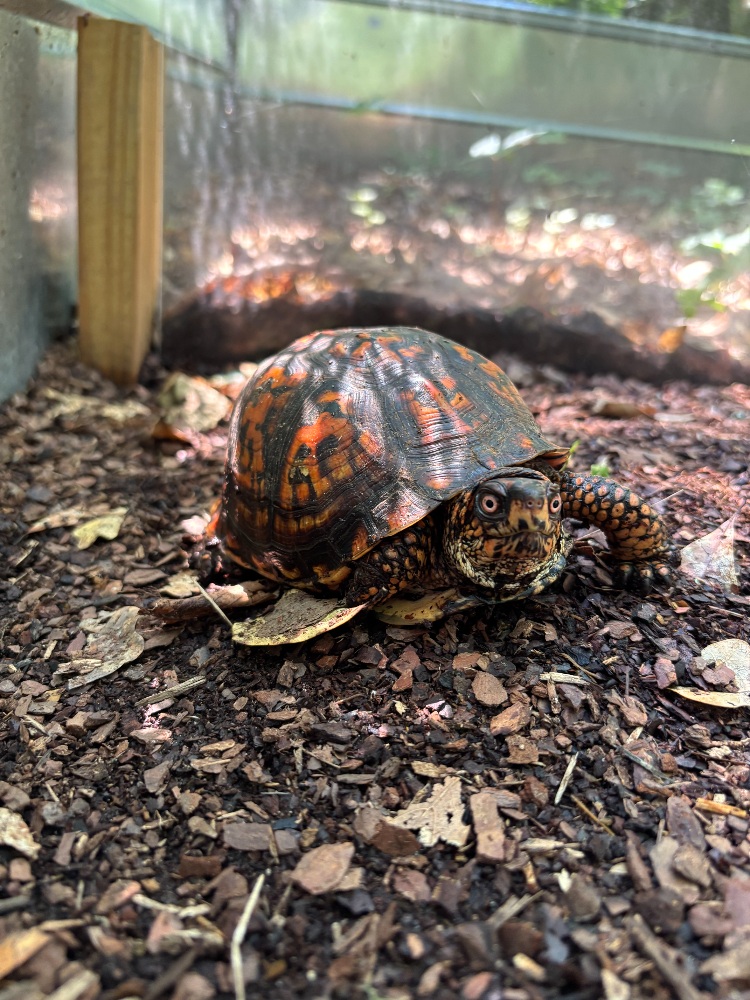
If you see box turtles living near your yard, don’t build walls or fences that prevent the turtles from reaching their habitat. As noted above, a box turtle's home range can be as small as two acres. Having access to move about ensures the turtles can forage for their food.
If you see a box turtle crossing the highway, pick it up and move it to the side of the road in the direction it was travelling. Box turtles have strong homing beacons, so if you move them a couple of miles away, they will try to return to their home range.
Many of us probably see turtles when we’re out walking through the woods and want to remember the moment. It’s okay to take a picture and post it on social media but remove any geotagging so their location isn't publicly available. This helps reduce poaching risks. As Taylor says, “It’s cool to talk about turtles as long as we respect them.”

